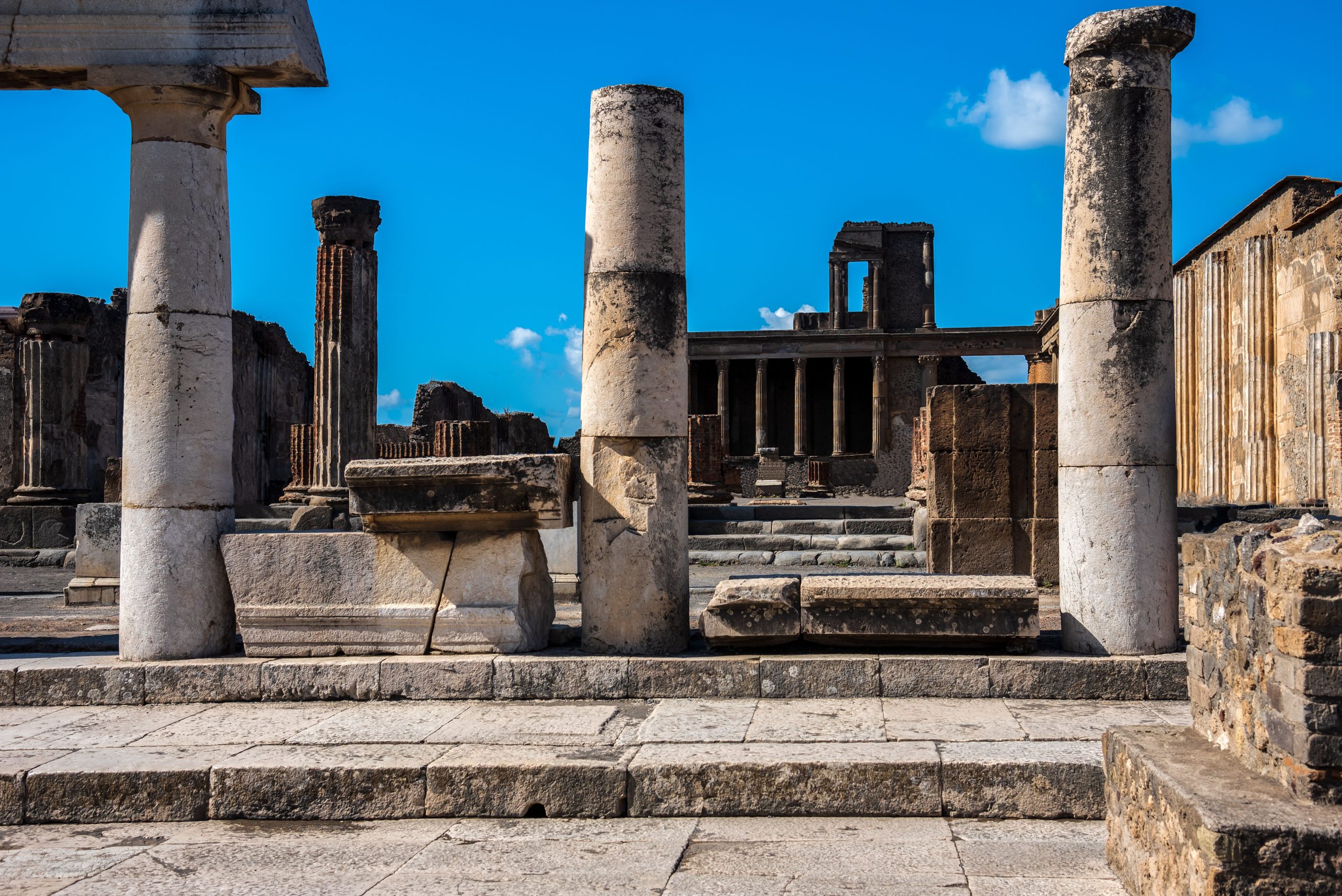
On a wall inside the Lupanar in Pompeii – the only purpose-built brothel from Greco-Roman antiquity that archaeologists can actually verify as one – someone scratched a woman’s name, a price, and two words: bellis moribus.
Charming ways. It sits next to more than 150 other graffiti in that one building: names, prices, boasts, jokes, a couple of death notices, and at least one argument between rival fan bases of neighboring towns that got so heated it later spilled into an actual riot in the amphitheater. People did not treat this place as a shameful secret. They treated it like a bulletin board.
I went looking for parallels between that economy and ours mostly out of morbid curiosity, expecting a tidy “everything old is new again” piece.
What I found instead was more specific and, honestly, less flattering to us: the Romans and Greeks had already sorted out several things about paying for intimacy that dating apps are only now stumbling back into, sometimes after burning a few billion dollars to relearn them.
The wall that priced you first
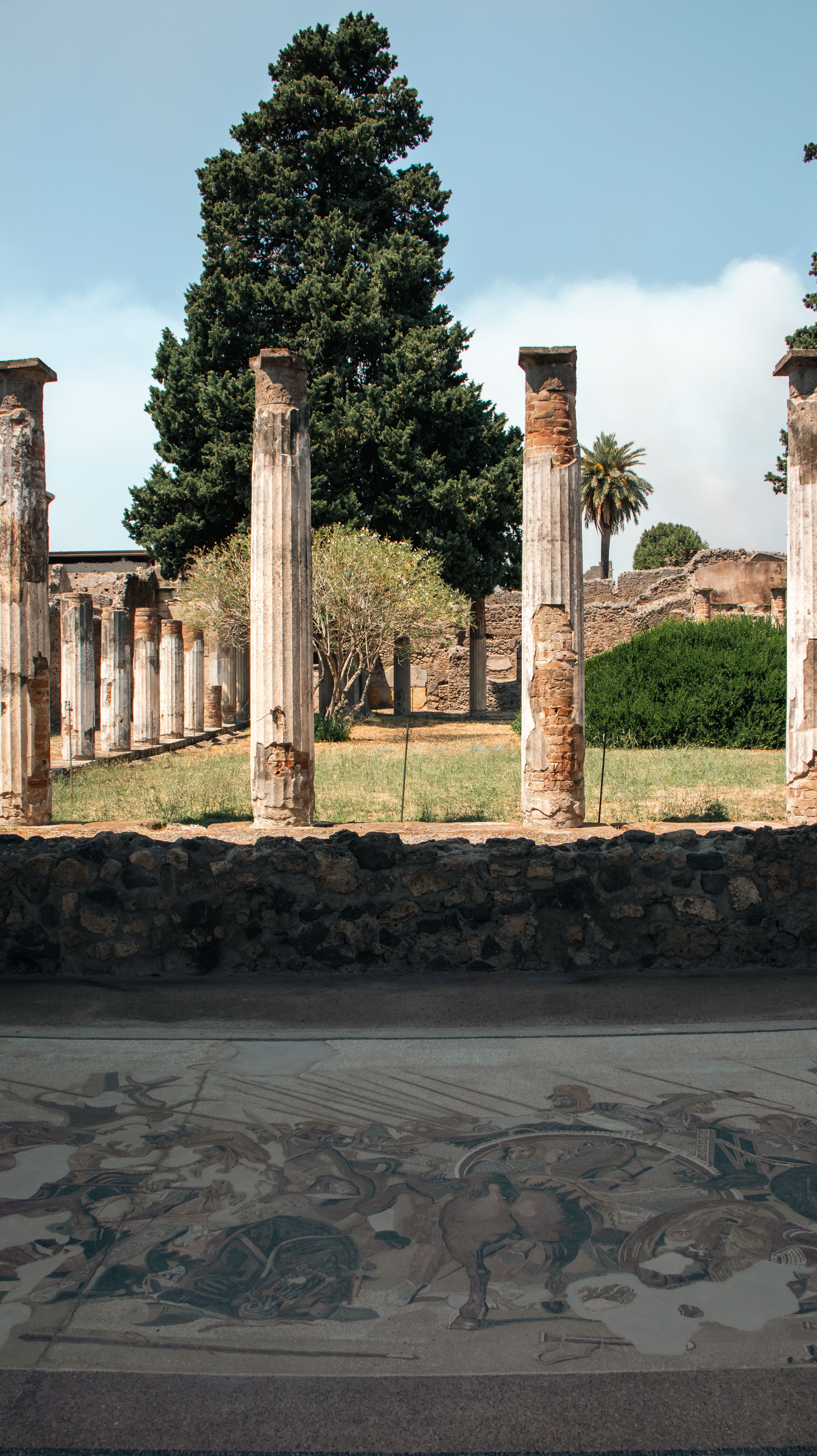
Start with the obvious part: the pricing was public. In the Pompeii Lupanar, ten small rooms held a mattress on a brick platform and not much else, and the price for whoever worked each room was often carved right beside the door.
Reading through the surviving inscriptions, the range is stark. Some name a price of two or three asses – roughly the cost of a loaf of bread. One graffito, considered unusually expensive for Pompeii, lists sixteen asses, a full denarius, close to a day’s wage for an unskilled laborer.
That spread matters more than it looks. Even the cheapest end of that market paid two to three times what an unskilled male laborer earned, according to the standard scholarly reconstruction of Pompeian prostitution economics.
It was a business with real margins, run by pimps (lenones) who bought enslaved women for several hundred sesterces and then priced their labor the way any manager prices inventory: by supply, by demand, and by whatever made a customer stop walking.
A phrase carved next to a name is basically a dating profile
That “bellis moribus” tag isn’t a one-off. Sarah Levin-Richardson, whose 2019 book The Brothel of Pompeii remains the closest thing to a definitive study of the site, found the phrase turning up repeatedly next to prices – apparently a stock compliment that worked, the ancient equivalent of “good vibes only” or “down to earth” in a bio.
Most of the graffiti in the building are just names, in fact; explicit content makes up only about a third of what’s on the walls. The rest reads like a cross between a guestbook and a review section, minus the star ratings.
I find that oddly touching and slightly depressing at the same time. Two thousand years before anyone had a smartphone, people were already trying to differentiate themselves in a crowded, transactional field with three words scratched next to a price tag. The format changed. The impulse – describe yourself in a way that gets picked – did not.
Rome and Athens already had a two-tier market – and the top tier wasn’t selling sex
Here’s the part most casual retellings skip, and it’s the one I think actually explains something about us. Ancient Athens ran a fairly explicit two-tier system. At the bottom, the pornai – usually enslaved or resident-alien women – worked brothels or the street, priced by the act, the way Pompeii’s graffiti record it.
At the top sat the hetairai: educated, often self-supporting companions who attended symposia, held their own conversations about philosophy and politics, and were paid not per encounter but for their time and company over an extended relationship.
The price gap between the two tiers is almost comic. The comic poet Philemon jokes that some brothels charged as little as one obol – a sixth of a drachma.
Meanwhile, the historian Athenaeus records the retired hetaira Gnathaina charging a wealthy foreign client a thousand drachmas for a single night with her daughter – a difference on the order of six thousand times, even allowing for comic exaggeration.
Scholars who’ve studied this gap conclude the client wasn’t mostly paying for sex at that price. He was paying to be made to feel important by someone whose attention was, by design, scarce and hard to buy.
That distinction – paying for presence rather than a single transaction – never actually disappeared, it just stopped being openly discussed. Modern companionship services built around time and conversation rather than volume, like Louisa, are structured closer to the hetaira model than to the swipe-and-match economy most people associate with paid intimacy today: the fee covers an evening, not an act.
It’s worth noticing that this older model survived every attempt to flatten it into something more transactional, probably because the thing it’s selling – undivided attention – has never gotten cheaper to produce.
The uncomfortable part nobody puts on the postcard
I want to push back on the version of this story that turns ancient prostitution into a proto-feminist success story, because the evidence doesn’t support it cleanly. A 2023 study in The Classical Quarterly by Levin-Richardson examined every surviving Pompeian reference to vernae – home-born enslaved people – and found that seventy-one percent of them were tied directly to sexual exploitation.
Verna, in fact, was the single most common descriptor used in Pompeii’s advertisements for sexual services, more common than any specific sex act. The charming graffiti and the wit of famous hetairai like Aspasia and Phryne sit right next to a system built substantially on people who had no say in the matter.
Even the “empowered courtesan” reading of the hetaira is contested among historians. Classicist Rebecca Futo Kennedy has argued that hetairai were not prostitutes or courtesans at all, but elite women who participated in the same luxury and symposium culture as their male counterparts – a genuinely different position from scholars like Konstantinos Kapparis, who reads ancient sources as treating hetaira as essentially a polite word for any high-priced prostitute.
I lean toward the messier middle: the historical record has room for both genuine social mobility and real coercion, often in the same person’s life, and flattening it into either a horror story or a girlboss narrative loses what actually happened.
Two economies of desire, priced out
Lay the ancient tiers next to what dating apps now charge, and the structure lines up almost too neatly.
| Tier | Ancient example | What was purchased | Modern rough equivalent |
|---|---|---|---|
| Budget / volume | Street or graffiti-priced porne, 2–3 asses (about a loaf of bread) | A single transactional act | Free swipe-based app tier |
| Mid-tier | Brothel room, up to 16 asses (roughly a laborer’s daily wage) | A private encounter, still per-visit | Paid app subscription, averaging around $19/month per Morgan Stanley’s 2023 estimate |
| High-end companionship | Hetaira, reportedly up to 1,000 drachmas for an evening (extreme case, per Athenaeus) | Sustained attention, conversation, exclusivity of time | Professional companionship services priced per engagement rather than per swipe |
Ancient prices from Pompeian graffiti (CIL 4 inscriptions) and Athenaeus’ Deipnosophistai; modern subscription figure from Morgan Stanley research cited by CNBC, 2023–2026.
The bottom tier is where most dating-app users actually live, and it’s also where most of the current complaining is coming from.
Business of Apps put the global dating app market at just over $6 billion in 2025 revenue – a slight decline, the first the industry has recorded – spread across roughly 350 million users, of whom only about 23 million pay for anything at all.
The apps rediscovered gamification. Users noticed.
Wharton’s Pinar Yildirim, who studies platform economics, has described the mechanic bluntly: show users a scarce number of matches for free, then charge to lift the ceiling.
“Psychologically, it does work,” one industry veteran told CNBC of the tactic. It’s the same logic Pompeii’s pimps applied with a chisel instead of an algorithm – scarcity as a pricing lever – just automated and A/B-tested.
Users are pushing back harder than the industry expected. The Harris Poll’s February 2026 Modern Dating Survey found that 72% of singles now say dating apps have made dating feel more transactional than romantic, and 56% call meeting up through an app outright “cringe.”
Four in five say meeting someone organically feels “cute or cool,” and three-quarters think apps don’t offer enough genuinely curated ways to meet the right people.
Emily DiVito, a senior economic policy advisor who co-authored a recent report on dating app paywalls, described what happened plainly: “a slow degradation of app quality and match potential” alongside “this rise of monetization.” That is, in effect, a modern brothel owner’s complaint rewritten for software – the product got worse right as the pricing got more aggressive.
Money is reshaping the actual matching criteria too, not just the app fees. The same Harris Poll survey found 74% of singles now prioritize a partner’s financial stability, and 60% say compatibility matters more to them than chemistry – an inversion of the courtship logic dating culture has claimed to run on for decades.
Meanwhile CNBC reported, citing BMO’s 2026 Real Financial Progress Index, that the average Gen Z date now costs about $205, millennials about $252, and that half of singles are dating less often specifically because of the expense. The economics of ancient prostitution and modern dating have converged on the same blunt fact: intimacy has a price, and price shapes who gets access to it.

What the loneliness numbers say the apps stopped providing
If the hetaira tier was ultimately selling attention rather than sex, its disappearance from the mainstream dating market might explain something odd in the current data: people are using more connection technology than ever and reporting more loneliness than ever, at the same time.
Norton’s 2026 Insights Report found that 81% of people surveyed globally report experiencing loneliness, rising to 90% among Gen Z respondents specifically.
Perhaps the most striking figure in the whole report: 67% of current online daters say they’d consider dating an AI chatbot, and 37% believe you can genuinely develop romantic feelings for one.
A separate 2026 meta-analysis in Communications Psychology, reviewing 27 studies covering more than 21,000 people, found dating app use associated with elevated emotional distress and appearance-related concerns, with the strongest effects showing up in compulsive, dysregulated usage patterns rather than in overall wellbeing.
So here’s the question I’d put to anyone defending the current app model: if the format that scaled best (free, swipe-driven, gamified scarcity) is the one users describe as most transactional and cringe-inducing, and the tier people actually say they want – curated, unhurried, focused on one person’s attention – has migrated toward paid companionship models instead of dating apps, what does that say about which one the market actually values?
I don’t think it’s a coincidence that the oldest recorded pricing tier for intimacy was the one built around sustained attention, and that it’s the one modern platforms have struggled hardest to replicate at scale.

Where the parallel actually breaks
None of this is an argument that modern dating is secretly as bad as Roman slavery, and I want to be direct about that before anyone reads it that way. The core, non-negotiable difference is consent. Pompeii’s lenones bought people.
Roman and Greek law gave enslaved sex workers no meaningful say in their own labor, and the epigraphic record – that seventy-one percent figure for exploited vernae – makes the human cost of that system unambiguous.
Whatever complaints exist about modern dating apps (and there are plenty, backed by real data above), users are not owned by the platforms extracting fees from them.
That distinction isn’t a technicality; it’s the whole moral difference between the two systems, and it’s worth saying so plainly rather than letting a clever historical parallel imply otherwise.
What does carry across, in my read, is narrower and more mundane: once you turn intimacy into a priced market of any kind, you get tiers, you get advertising, you get gamified scarcity, and you get a persistent premium for genuine attention over volume. The Romans didn’t need a psychology department to figure that out. They had a wall and a chisel.
How this article was put together
The ancient material draws on Sarah Levin-Richardson’s The Brothel of Pompeii (2019) and her 2023 Classical Quarterly study of enslaved vernae, alongside standard reference material on Pompeian brothel graffiti (CIL 4 inscriptions) and classical sources on Athenian hetairai, including Athenaeus’ Deipnosophistai.
Modern statistics come from the Harris Poll’s February 2026 Modern Dating Survey, Norton’s 2026 romance and loneliness Insights Report, Business of Apps’ 2026 dating-app market data, SSRS’s 2026 online dating survey, and CNBC and Business Insider reporting on 2026 dating-app pricing, all checked in August 2026.
Where ancient prices are quoted in asses or drachmas, exact modern purchasing-power equivalents are disputed among historians, so comparisons above are relative (loaves of bread, a day’s wage) rather than currency-converted.
The academic debate over whether hetairai should be classed as courtesans, prostitutes, or neither remains genuinely unresolved among classicists, and is presented here as such.