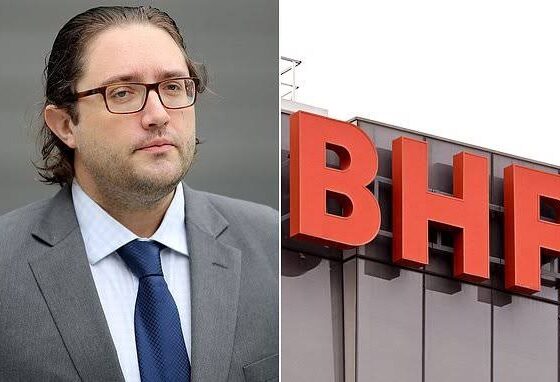
Pogust Goodhead is under renewed pressure following reports about private aircraft, luxury accommodation, yacht events, and expensive corporate hospitality during the leadership of former chief executive Tom Goodhead.
The allegations have emerged alongside financial concerns and significant management disruption at the claimant law firm. Goodhead denies wrongdoing, while the current board says stronger governance and spending controls have been introduced.
New Team Takes Charge of the BHP Case

The changes to leadership in the BHP litigation have become particularly important as the case moves into its compensation phase. In June 2026, Pogust Goodhead announced a strategic partnership with international disputes firm Quinn Emanuel to support the next stage of the proceedings.
Quinn Emanuel is expected to lead the legal strategy while working alongside Pogust Goodhead, which continues to represent more than 600,000 claimants affected by the 2015 Mariana dam collapse in Brazil.
The partnership followed several senior departures from Pogust Goodhead and months of uncertainty surrounding its leadership. Bringing in another experienced litigation firm could help protect continuity, retain specialist knowledge, and reassure claimants that preparation will continue despite the internal disruption.
A dedicated funding facility of up to $150 million was also announced for the BHP proceedings. An initial portion of that financing will support expert evidence, claimant administration, legal work, and preparation for the stage dealing with compensation.
Luxury Spending Allegations Intensify Scrutiny

An investigation commissioned by Pogust Goodhead’s restructured board reportedly described excessive and uncontrolled expenditure under Goodhead’s leadership. Media reports identified private flights, helicopter travel, yacht parties, luxury hotels, and other hospitality costs.
Travel and entertainment expenditure reportedly exceeded £5 million across 2023 and 2024. These claims attracted attention because the firm depended on substantial commercial financing to pursue complex cases that could take years to generate income.
Goodhead has rejected allegations that litigation money was improperly spent on his personal lifestyle. He argues that the disputed costs were connected to international business, claimant meetings, recruitment, fundraising, and preparation for major proceedings.
He has also maintained that no protected client funds were used for personal expenses. According to Goodhead, relevant expenditure was properly addressed through his director’s loan account. The reported allegations remain disputed and have not been confirmed as findings of misconduct by a court.
Financial Stability Remains Essential
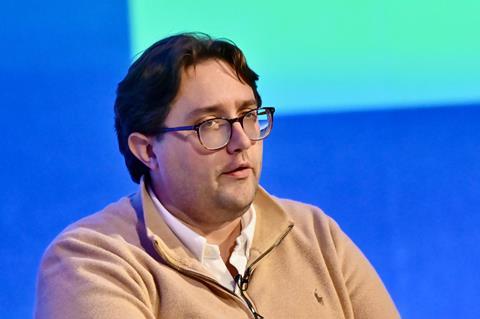
The BHP case demonstrates why large claimant actions require considerable financial resources. Lawyers must coordinate evidence across different countries, employ specialist experts, maintain administrative systems, and communicate with hundreds of thousands of clients.
Pogust Goodhead’s largest funding relationship has been with US investment manager Gramercy, which agreed a reported $552 million financing package with the firm in 2023. Further credit facilities were subsequently provided to support ongoing litigation.
External funding can allow victims to challenge corporations with significantly greater resources. However, it can also create questions about debt, investor influence, and the division of potential compensation following a successful outcome.
Pogust Goodhead maintains that its financial backers do not control litigation strategy. The firm says professional decisions remain with qualified lawyers who are required to act independently and protect their clients’ interests.
Conclusion
The private jet and party allegations have damaged Pogust Goodhead’s public image, but their practical significance extends beyond reputation. Strong financial controls and stable legal leadership are essential when a firm is responsible for one of the largest group actions in English legal history.
The involvement of Quinn Emanuel and new dedicated financing may reduce the risk of disruption in the BHP case. Pogust Goodhead must now demonstrate that governance reforms are effective and that claimants remain protected throughout the compensation process.